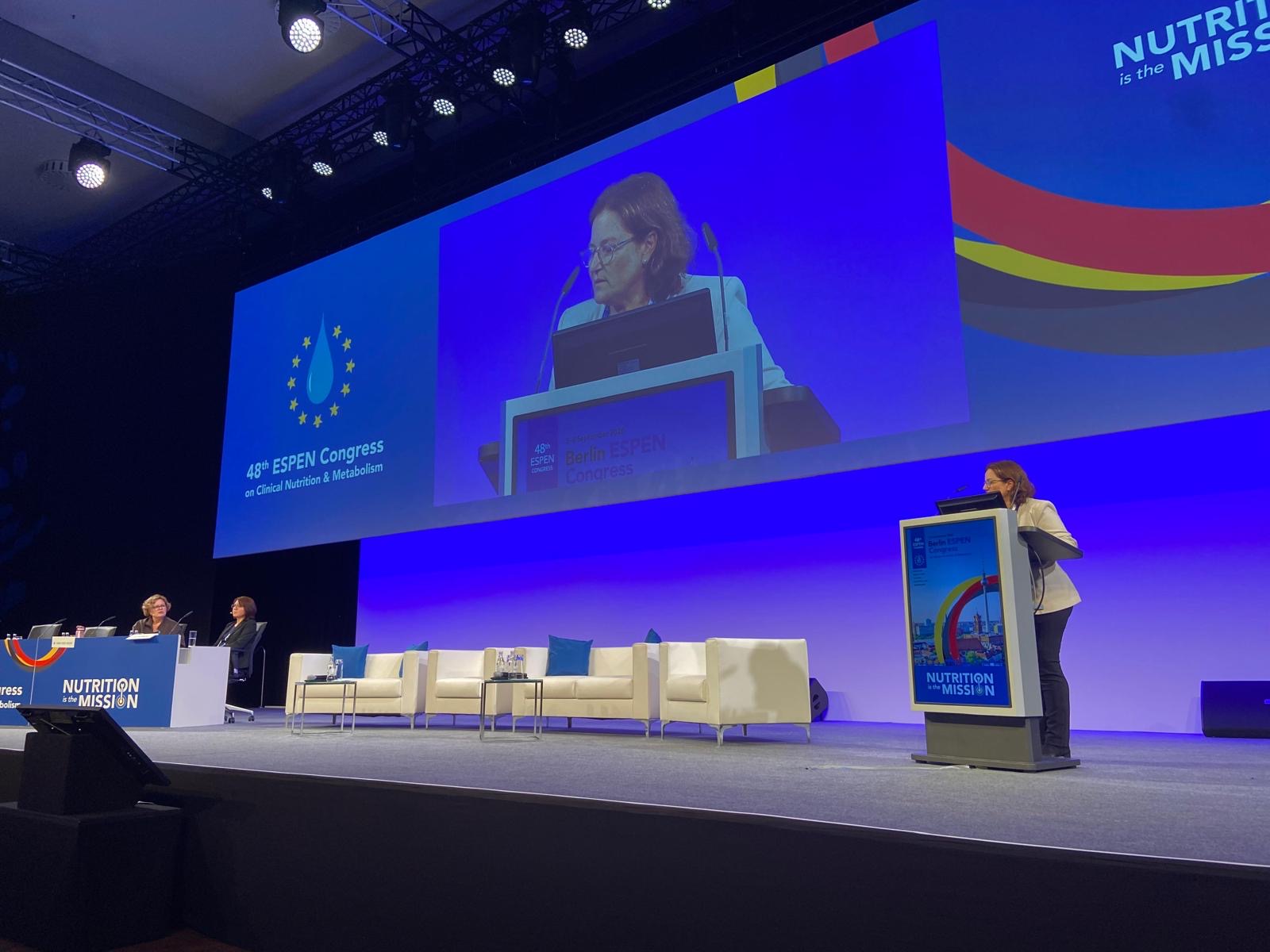
Dr. Begoña Muguerza Presents Advances in Chrononutrition and Metabolism at the ESPEN 2026 International Congress
Dr. Begoña Muguerza, Director of the Nutrigenomics Research Group at the Rovira i Virgili University (URV), participated as an invited speaker at the 48th ESPEN Congress on Clinical Nutrition and Metabolism, held from September 5 to 8, 2026, in Berlin, Germany.
During her presentation, entitled "Meal Timing: Impact of Nutrient-Clock Genes", she highlighted recent research advances on how biological rhythms influence metabolic responses to nutrients and dietary bioactive compounds.
The lecture explored how circadian and seasonal rhythms regulate metabolism through central and peripheral biological clocks, whose synchronization depends on both environmental factors, such as light exposure and photoperiod, and feeding-fasting cycles.
She also presented findings from research conducted by the Nutrigenomics Research Group, demonstrating how different photoperiods can induce specific metabolic adaptations and modify the body's response to the same nutritional stimulus.
Particular emphasis was placed on studies involving polyphenol-rich bioactive compounds, including grape seed extracts and other fruit-derived ingredients, whose metabolic effects may vary according to photoperiod, sex, metabolic status, and the characteristics of the bioactive compound itself.
The presentation further addressed the concept of xenohormesis, which proposes that the seasonal origin of plant bioactive compounds may interact with the physiological state of the organism, thereby influencing their biological effects.
In conclusion, Dr. Muguerza emphasized the bidirectional relationship between nutrition and biological clocks: while meal timing can influence metabolic responses to nutrients, certain dietary components can in turn modulate biological rhythms.
These advances contribute to the development of precision chrononutrition, an emerging approach based on the integration of three key factors: WHAT we eat, WHEN we eat it, and WHO is eating it, with the goal of better understanding and optimizing individual metabolic responses.
Share